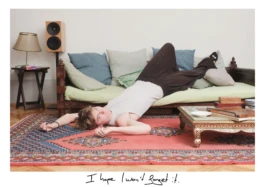
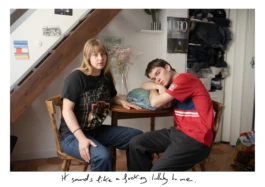
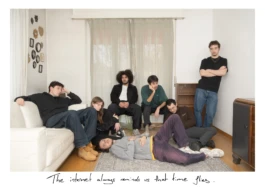
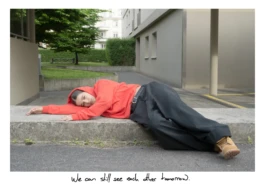
Already adults, almost too late to talk about coming-of-age, yet adolescence still remains. This project emerges from a constant melancholy coming from this obsolete teenagehood. A generation for whom everything accelerated at once, who lived too much too soon or too late. So we wait, we work, slowly expecting that promise to occur. Without a defined story to tell, ordinary characters are staged in intangible places that might have stayed empty, filled with memories in transit — neither settled or gone but trapped in settings never meant to hold them, inside an aesthetic of youth that no longer fits. Simple text, slightly lyrical: sometimes a single line about being alive, the kind you might find in a post, a caption, an intrusive thought.
Marvin is a 23-year-old photographer trained in Vevey (CEPV), Switzerland. Inspired by cinema, teen movies, the aesthetics of the “cliché” and the issues of Gen Z, he stages youth and its latency. Fascinated by transition, he speaks about adolescence through characters already young adults, for whom everything happened too fast.


Marvin Estevez-Locatelli
Something happened and nobody knows what.
Already adults, almost too late to talk about coming-of-age, yet adolescence still remains. This project emerges from a constant melancholy coming from this obsolete teenagehood. A generation for whom everything accelerated at once, who lived too much too soon or too late. So we wait, we work, slowly expecting that promise to occur. Without a defined story to tell, ordinary characters are staged in intangible places that might have stayed empty, filled with memories in transit — neither settled or gone but trapped in settings never meant to hold them, inside an aesthetic of youth that no longer fits. Simple text, slightly lyrical: sometimes a single line about being alive, the kind you might find in a post, a caption, an intrusive thought.
Marvin is a 23-year-old photographer trained in Vevey (CEPV), Switzerland. Inspired by cinema, teen movies, the aesthetics of the “cliché” and the issues of Gen Z, he stages youth and its latency. Fascinated by transition, he speaks about adolescence through characters already young adults, for whom everything happened too fast.